“America’s prisons have become warehouses for the mentally ill” (Stevenson 186).
This is how Bryan Stevenson opens chapter ten of his novel, Just Mercy. This book takes readers along Stevenson’s works and efforts throughout his career as a lawyer serving EJI, the Equal Justice Initiative. Stevenson’s novel takes us through numerous cases that he has served and fought for, but the backbone of the book is the case of Walter McMillian, a man wrongfully accused of murder who would have faced death if it weren’t for Stevenson’s intervention. Stevenson highlights many themes throughout his novel, but the one this essay will focus on is the theme that “mass incarceration… and excessive sentencing… of poor and mentally ill people has been a driving force in achieving our record levels of imprisonment” (186). Stevenson blames the justice system for the mass incarceration of the mentally ill, however, I believe that poverty and Big Pharma play larger roles in the mass incarceration of these people than the justice system does.
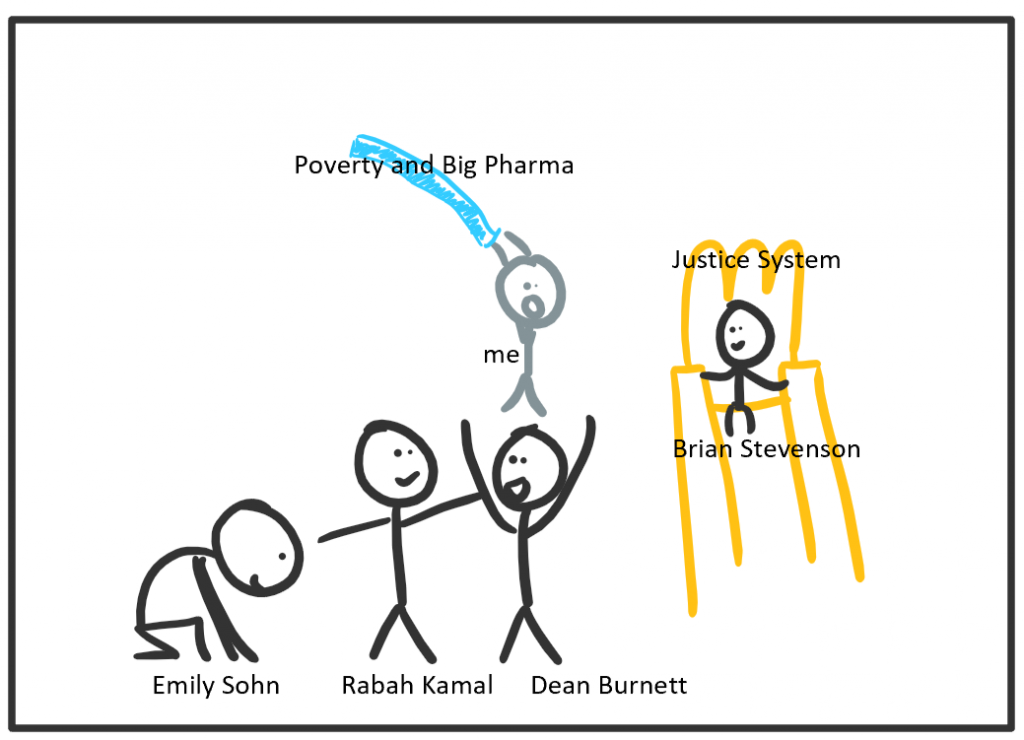
I want to start with Emily Sohn’s article: the idea that people in poverty have a higher risk of mental illness. After developing that idea, I will introduce Rabah Kamal’s graphs and demonstrate that there is a strong correlation between mental illness and poverty. Once I have established that, I will introduce Dean Burnett. Burnett writes about the correlation between poverty and mental illness, explaining that one cannot be combatted without the other, reinforcing the idea that there is a correlation between the two. One that is established, I will bring up the Harvard study piece, which will Segway my essay from mental illness and poverty, to big pharma its monopolies. This study exposes Big Pharma for its monopolies, revealing the extent of its price raises. With that being said, I can finally begin my argument against Stevenson: the justice system is not all to blame for the mass incarceration of the mentally ill, Big Pharma plays a role, making it harder for impoverished people to access medicine, making them more susceptible to mental illness, which is why there is an increasing amount of individuals with mental illness being incarcerated, because Big Pharma is making it harder for people to access their medicine.
I would like to intervene by creating a stream of ideas from my sources, connecting one source to the other, until I have a foothold in the conversation and I can begin my conviction against Big Pharma. I ultimately want to suggest that the justice system should not receive as much blame as Stevenson has given it, and refocus the blame on Big Pharma and the monopolistic principles it follows, which enables it to raise its prices, making it that much more difficult for people to afford their medication.

Leave a Reply